 Magana Power Solutions
 If your electricity bill seems to go up every year, you’re not imagining it. For more than fifteen years, electricity prices in South Africa have risen far faster than inflation, and every new tariff increase takes a bigger bite out of household and business budgets. Solar power is one of the most practical ways to take back control.
Electricity keeps getting more expensive
Eskom applies for tariff increases almost every year, and municipalities usually add their own increases on top. For most households, that means paying more for the same amount of electricity, year after year, with no end in sight.
Every unit of electricity you generate from your own solar panels is a unit you don’t have to buy. As tariffs rise, the savings from a solar system grow with them.
Power supply is still uncertain
Load shedding has eased compared to the worst years, but many South Africans remember what it cost them: spoiled food, lost working hours, damaged appliances, and businesses forced to close their doors during outages. The grid is still under pressure, and there’s no guarantee the lights will always stay on.
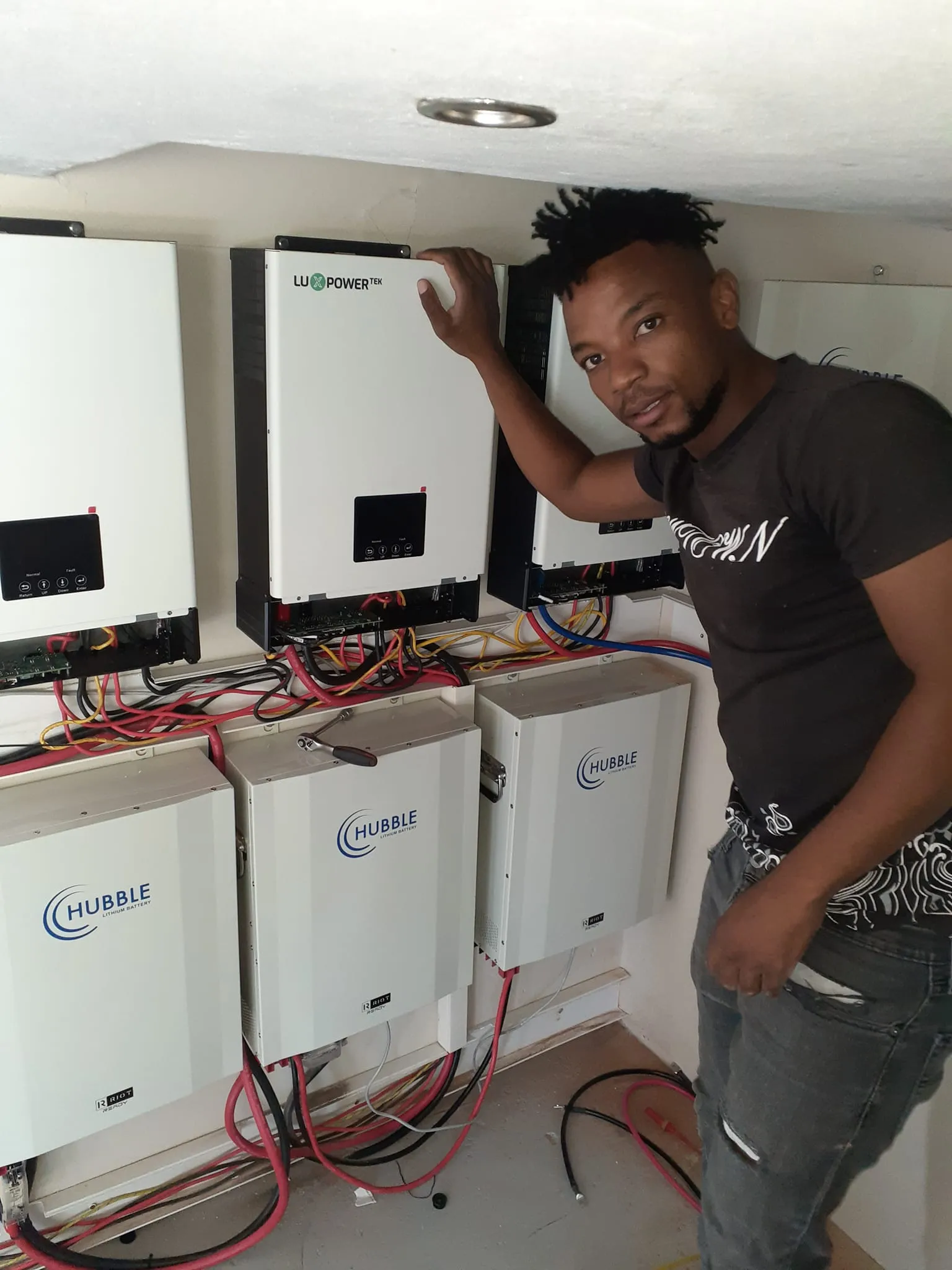
A solar system with battery storage keeps your essentials running when the grid goes down — lights, fridge, Wi-Fi, TV, and security systems — without the noise, fumes, and fuel costs of a generator.
South Africa has sunshine to spare
South Africa is one of the sunniest countries in the world, with many regions enjoying clear skies for most of the year. That makes solar panels here especially productive — the same system generates more power in Gauteng than it would in much of Europe, where solar is already widely used.
How a solar system works
A typical home or business system has three main parts:
- Solar panels on your roof turn sunlight into electricity during the day.
- A hybrid inverter — such as a Sunsynk or Deye — manages power from your panels, your batteries, and the grid, always using the cheapest source available first.
- Lithium batteries store extra solar energy so you can use it at night or during power cuts.
During the day your home runs on solar power, and any surplus charges your batteries. At night, or when the grid goes down, your batteries take over. The grid only steps in when you need it.
The benefits at a glance
- Lower electricity bills: use less power from the grid and protect yourself from future tariff increases.
- Backup power: keep your essentials running during outages.
- Higher property value: homes with solar and backup power are increasingly attractive to buyers and tenants.
- Cleaner energy: South Africa’s grid relies heavily on coal, so every unit of solar power reduces your carbon footprint.
- Long lifespan: quality solar panels typically last 25 years or more with minimal maintenance.
What to consider before going solar
Every property is different, so a good installer should look at:
- Your electricity usage: your monthly bills show how much power you use and when.
- What you want to back up: essentials only, or your whole home or business.
- Your roof: the space available, which way it faces, and how much shade it gets.
- Your budget: systems can start small and be expanded later with more panels or batteries.
Getting started
At Magana Power Solutions, we supply, install, and maintain complete solar systems for homes and businesses, working with trusted brands like Sunsynk and Deye. We’ll help you choose a system that fits your needs and budget, and keep it running at its best long after installation.
Ready to cut your electricity costs? Contact us for a free quote.